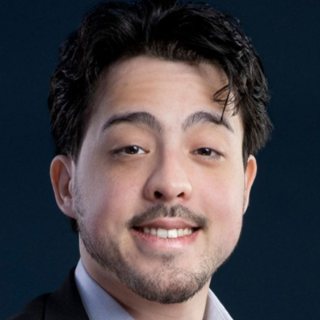
Vanio Antunes
Final-year medical student with more than 30 peer-reviewed publications, three open-source R packages, and more than 20 hours teaching statistics applied to evidence synthesis. I combine clinical training with postdoctoral-level statistical methods and production-grade programming. In the future, I want to work with 3D reconstruction in radiology.
My trajectory
From medical school to radiology, and where I want to go next.
-
2021
-
Medical school
Started medical school at UFCSPA, a federal university with no tuition.
-
-
2023
-
Learning meta-analysis
Learned how to do meta-analysis online and started publishing, on the way to 30 PubMed-indexed papers and 400+ citations.
-
-
2024
-
Mentoring specialists
Started mentoring 12 certified specialists from 4 countries (Brazil, the United States, Israel and India) in research within their own areas.
- Hospitalists
- Residents
- Endoscopists
- Radiologists
-
100 citations
Reached 100 citations.
-
-
2025
-
An educational product
Built a whole educational product end to end, from concepts and slides to recording and hosting: 20+ hours of statistics applied to evidence synthesis, taken by 3,000+ students from 100+ countries.
-
-
2026
-
R packages
Developed three open-source R packages for the methods I use: nmaplots, easyDTA and meta3l.
-
September: Radiology
After rethinking my career, I decided to pursue radiology instead of gastroenterology.
-
-
Future
-
3D reconstruction
I strongly want to work on reconstruction algorithms and software for 3D composition, and on innovation in signal theory across hardware and software.
-
I am a final-year medical student at UFCSPA with a research trajectory that started early and accelerated fast. My work spans cardiology, hepatology, gastroenterology, and neurology — always at the intersection of clinical questions and rigorous quantitative methods.
What distinguishes me from a standard medical student researcher: I write the code. I build and maintain open-source R packages for the exact methods I apply in papers. I have designed and executed network meta-analyses, GLMM-based diagnostic accuracy syntheses, Bayesian evidence models, and three-level hierarchical meta-analyses — and can hand a PI reproducible, documented pipelines on day one.
I am actively looking for a research position or funded PhD with a PI who values methodological rigor and a collaborator who can run from protocol to published code.
Publications
30 PubMed-indexed papers across cardiology, gastroenterology, and more.
Educational and teaching achievements
Bilingual (EN/PT) systematic review and meta-analysis curriculum, built and led from scratch.
End-to-end program from viability assessment → protocol design → screening/extraction → statistical synthesis → reporting. Aligned with the Cochrane Handbook, implemented in R.
Individual mentoring sessions for researchers and medical students conducting their first systematic review or meta-analysis — from topic selection through to manuscript submission.
Not one-off lectures. Structured evaluation checkpoints guide learners from novice to reproducible R-based synthesis. Reusable templates reduce friction and ensure consistency.
Built the full delivery pipeline: planning → slide production → recording → editing → hosting → distribution. Operational from day one — not a prototype.
Get in touch
Looking for a research position or funded PhD opportunity with a PI working in clinical epidemiology, evidence synthesis, or methods development.